
BEFORE FLAMENCO
The Secret Story of a Music Born Between Peoples, Borders, and Lost Memories
BEFORE FLAMENCO
Chapter I - Andalusia Before Flamenco
Long before a flamenco guitar made a Paris theatre weep, there was a land where three peoples learned to pray beneath the same sky without meeting each other’s eyes. It was called Al-Andalus. And its music did not yet have a name.
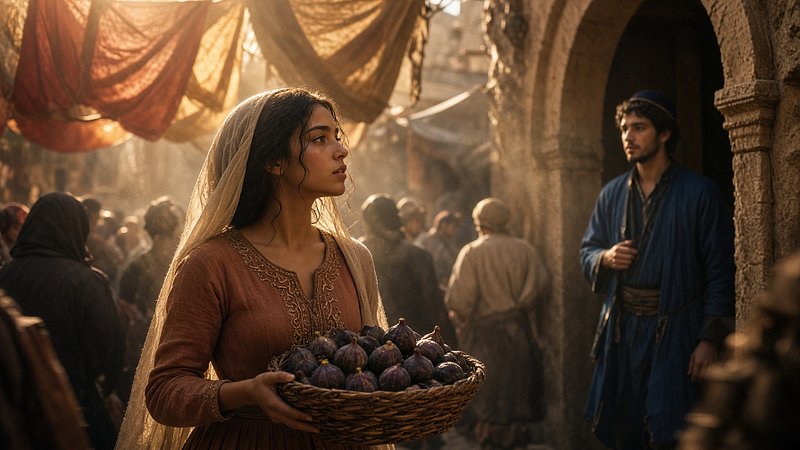
Córdoba, year 1013. The Caliph’s library holds four hundred thousand manuscripts - more books than in all of Christian Europe combined. In the marketplace, a Mozarab girl crosses with a basket of figs. Her name is Zulema, though her mother baptized her Elvira. A young Jewish man watches her from the corner of the parchment-makers’ street. His name is Yusuf. He knows he should not look at her. She knows she should not return the gaze. And yet, for three seconds, the entire marketplace ceases to exist.
This too was Al-Andalus: three peoples who needed each other, despised each other, loved each other in secret, and together made a civilization none could have made alone.
The music of that life was not yet flamenco. But it already knew how to weep.
In the synagogues of Lucena, Jews sang melodies carried from Babylon. In the mosques of Seville, muezzins called to prayer with vocal breaks from the desert. In the Mozarab churches, a liturgy was sung that Rome considered heretical. And in the courtyards, when no one was looking, everyone sang everyone else’s songs.
No one signed these melodies. They passed from throat to throat the way bread is passed, the way fear is passed. Zulema knew how to sing in three languages: Latin for God, Arabic for the marketplace, and a nameless language - a mixture of everything, made of leftovers - for the nights when she thought of Yusuf and could not sleep.
That unsigned music is the ash upon which flamenco would burn, centuries later.
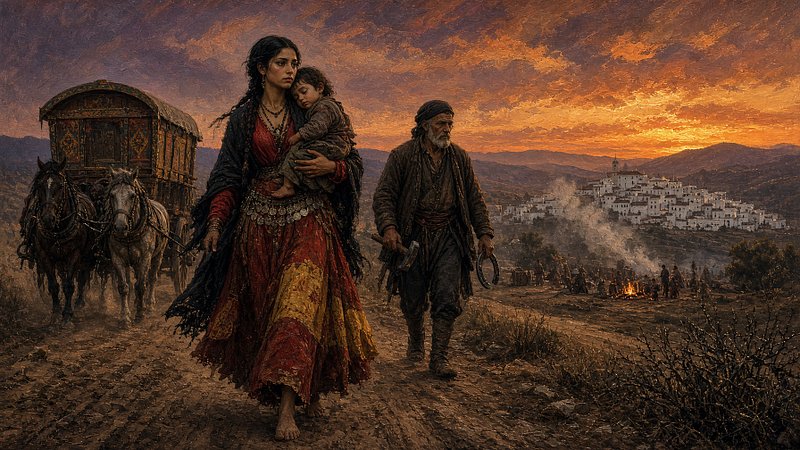
At some point in the fifteenth century, strange pilgrims began arriving by the northern roads. They said they came from Lesser Egypt. In truth, they came from the Punjab, from an exile so ancient they had forgotten its beginning. They were called gypsies.
They brought a music that belonged to no one because it came from everywhere: echoes of India, the Caucasus, the Balkans, Anatolia. They arrived in an Andalusia already trembling.
In 1492, the Catholic Monarchs expelled the Jews. In 1499, the Muslims were forced to convert or leave. In 1609, the last moriscos were expelled too.
And in the midst of that emptying, the gypsies - the last to arrive, those with nothing to lose - gathered up everything the others dropped as they fled. Jewish chants without a synagogue. Arabic modes without a mosque. Mozarab laments without a liturgy. All of it they placed into a cante that did not yet have a name.
For three centuries, this music was sung low, because to sing loud was dangerous. It was sung broken, because throats no longer knew how to sing any other way. And from that obligatory silence, from that voice which had learned to say everything in a whisper, was born the cante jondo - the deep song, the song that comes from so far within that it emerges already wounded.
When the European Romantics “discovered” flamenco in the nineteenth century, they believed they had found an exotic music. They did not understand that they were listening to the compressed memory of three exiled peoples, sung by the fourth people who had carried the ashes of the others.
Flamenco was never a gypsy music. It was the sonic archive of everything Andalusia lost.
Zulema never wrote the letter she wanted to send to Yusuf. She did not know how to write. But her great-great-granddaughter, three centuries later, sang it without knowing she was singing it. And from that unsigned song was born, one day, something the world learned to call flamenco.
Want to read the full story? The extended version of this chapter - with the letter Zulema never wrote CINEMATIC VIDEO MUSIC, the marketplace scene told in full, and the exclusive musical piece “The Letter Zulema Never Wrote” - is available to Aetheric Chronicles subscribers.